But it won’t be a week of idleness; I’ve got a list of projects I want to tackle 😀
To prepare for the week, I created a label in Todoist to gather all the things I want to do. I set up a filter to show those tasks in Todoist’s calendar view.
Tasks scheduled for the day show up at the top. Events with times associated with them show inside the calendar. Tasks I’ve assigned with the label for the week, but that don’t have a date, are off to the right.
I can drag tasks onto, and around, the calendar as I think to schedule them.
Making a plan for the week.
The goal isn’t to be stressed during my week off, but to have a plan so I can get to the things that are important to me. I’ll start each day reviewing and adjusting the plan for the day. I’ll pay attention to my mood and interests and do things I want to do.
If I don’t get to something during the week? No stress. I’ll do it some other time. To-dos are a can do list, not a must do list. I’m in charge, not Todoist 😁
There are two main technical projects I want to work on during the week. 1) Python and Excel. Use the openpyxl library to programmatically manipulate Excel. 2) Make Automations. Testing more of what’s possible on no-code automation platforms like Make.
The Python project is one heavily enabled by AI. I use ChatGPT to go back and forth on what I want to do, tell it what’s not working, and try again. It would honestly take me six months or more to do this by myself (I’m not a programmer!). With AI I can do it in four hours. It’s pretty magical if you ask me.
What does your planning system look like? What tools and methods do you use? I’d love to hear about them. Email me at heykev@kevinnoble.xyz and tell me about them!
Kevin
A Quote
“
Managerial meddling is also an example of negative leverage. This occurs when a supervisor uses his superior knowledge and experience of a subordinate’s responsibilities to assume command of a situation rather than letting the subordinate work things through himself.
— Andy Grove in "High Output Management"
Three Things
1 - ☎️ ChatterBoss - Here’s a company with executive assistant services available for less than full time. You can start with 15 hours a month at $695 and scale up from there. Seems like a really good place to begin with an assistant, but once you need “full time” I’d probably look at Athena since I know more people who have used them with success. Don’t forget to leverage Radical Delegation!
2 - ⛰️ 29029 Everesting - Can’t travel to Everest? Everest will travel to you. This team rents out a mountain in various parts of the US and you’re invited to hike up, take the gondola down, and repeat until you’ve hit 29029 feet - the height of Everest. Very cool opportunity to do a hard thing.
3 - 🪙 Quarter App - This is a cool service for those who are interested in following public markets around the world. Listen to public investor calls, see the slides, take notes, search transcripts, and more. They already have 18 million users, and high ratings on the app store.
Deeper Dive on the Phase Change Model for Hiring
Your new hire’s growth in their role is similar to how the temperature changes in H2O as it goes from ice to water to steam.
As a former mechanical engineer, a lot of my mental models come from the natural world. A few years into hiring at scale I saw how an employee’s trajectory in a new company was analogous to how materials undergo phase changes.
I used that understanding to improve my hiring outcomes, and am sharing this with you so you can do the same.
Details of the Model
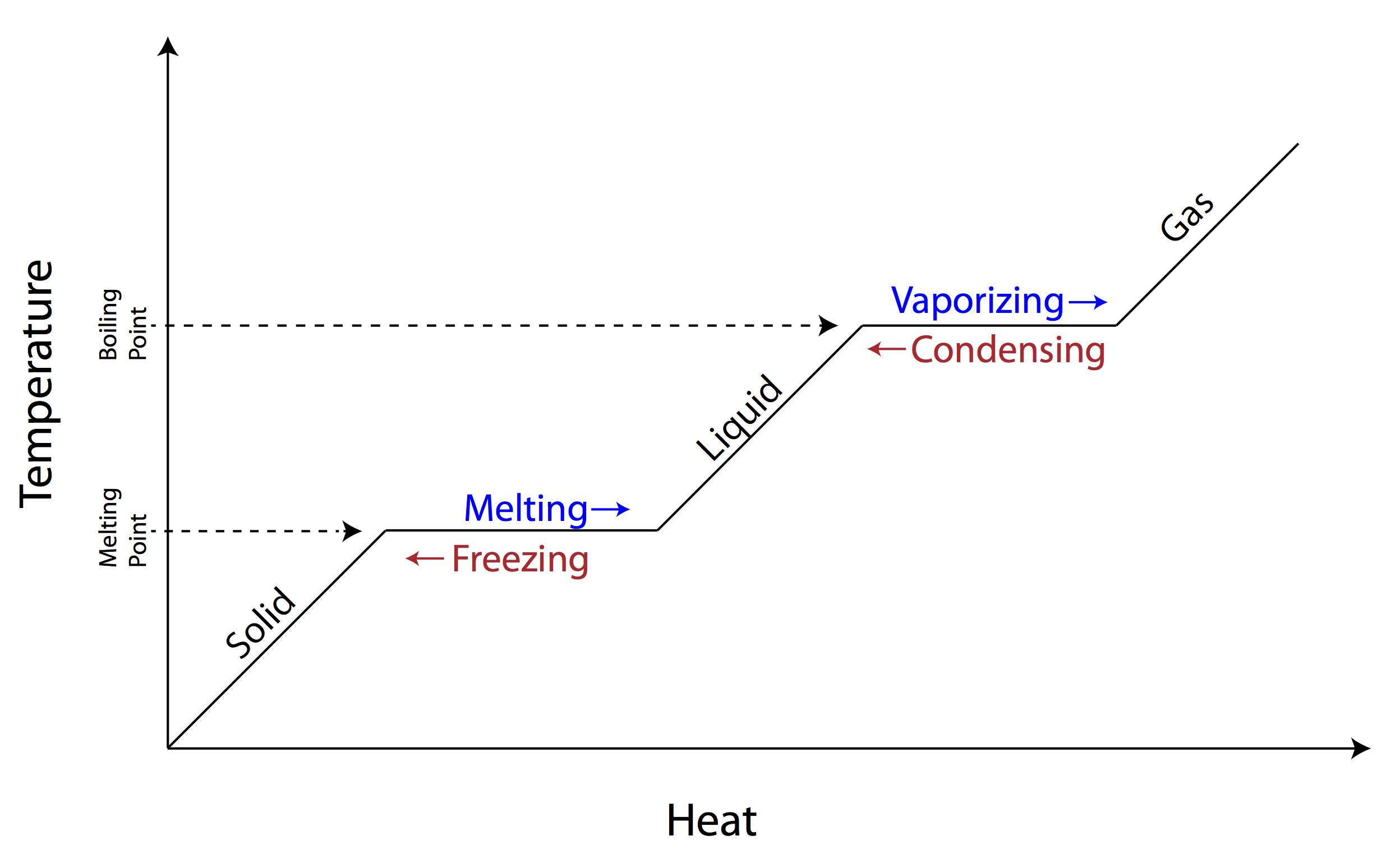
Did you know that temperatures stall in materials as they change phases? You keep applying heat, but the temperature doesn’t do anything. The burner is on, but your pot of water stubbornly sits at 210F (99C) for a while, and you can’t put the pasta in.
As heat is applied to a solid, the temperature ramps up until it hits its melting point, then it stalls there. You keep applying heat, and eventually it transitions into a liquid and the process begins again.
As heat is applied to a liquid, the temperature ramps up until it stalls again at the vaporizing point. You keep applying heat, and eventually it transitions into a gas and the temperature rises again.
Since this isn’t a physics newsletter we won’t go into detail (although you can read that here and here). We’ll borrow the big picture model for this, shown below.
Phase change model in physics.
Let’s convert a few things in that image to give us a model of hiring and employee growth.
Instead of heat on the horizontal axis, we’ll use time.
Instead of temperature on the vertical axis, we’ll use capability.
Beginnings of our model; capability over time.
The capability of an employee on the first day in the new company are the Initial Conditions.
The new employee ramping up in capability during their first few weeks and months is the Growth Slope.
Phase change model showing the initial conditions and growth slope.
At some point your employee’s growth will stall. Time passes, but their capability doesn’t appear to be increasing much. This is the First Stall.
How long it takes the employee to begin ramping up again is the Phase Change Time.
Put it all together and you’ve got a model that looks mighty similar to the one from physics!
Full phase change hiring model.
Initial Conditions
The Initial Conditions are how well the employee performs on the first day. This is where skills and experience trump hiring for characteristics.
If you need someone to write SQL and create a dashboard in Tableau, then hiring someone who’s been doing that in their last company will come in with high Initial Conditions.
If you need someone to come in and create a marketing campaign for a new product, but all they’ve done in the past is copywriting for someone else’s campaign, then they’re going to struggle on their first day.
Of all the hiring model components, Initial Conditions are a relatively easy thing to assess - which is also why a lot of companies hire this way. If you’re a developer, you’re going to have a coding test in the interview!
But someone’s tenure in your company will go far beyond that first day. Initial Conditions are therefore relevant, but they don’t tell the whole story.
An experienced woodsman is effective at chopping down trees on their first day.
Growth Slope
The Growth Slope is how fast this person will grow in effectiveness in their new environment.
A lot of new hires - especially leaders - make the mistake of bringing their old culture and old techniques with them to a new environment. What worked there may not work here.
The longer a person fights against the organization and its culture, the lower their Growth Slope and the longer it will take to become effective.
This part of the model is where characteristics start to have relevance!
I made a mistake in the first ever data analyst I hired. They passed the interviews and analysis tests super well, and we were excited to have them start.
At 3:00 PM on the first day, my new data analyst came to my desk and said, “Well, I think I’m going to get out of here. There’s not much going on.”
💩
I realized that I’d made a huge mistake. 😳
This person had very little drive and curiosity. The first day is the most exciting! There’s so much to read and catch up on. There’s so much to do. I worked very closely - and very differently - with this person starting on their second day. Ultimately they didn’t work out and I exited them within three weeks of hire.
I'm all for relaxing, but you should probably work a full day on your first day.
Drive and curiosity are critical for Growth Slope. You’re looking for someone who can come in and push themselves, versus you constantly having to tell them what to do next.
If drive is the energy to go somewhere, curiosity and judgment set the direction. Does this person ask a lot of questions? Do they want to understand the environment and the culture?
The best way to assess Growth Slope is to give the new hire a problem to solve. Give them ownership - the sooner the better.
If you have a new hire “onboard” for a month, which means passively attending meetings and reading documentation, you’re not getting a signal on their efficacy. This is not something you want to delay.
First Stall
The first stall is where the new hire’s development finally stalls. Everyone stalls in their careers; it’s a necessary part of development.
What’s most important is where they stall relative to the expectations of the role. If they stall below expectations, you’ve got a problem on your hands.
The longer they sit below the expectations of their role the more risk you create for them, the team, and yourself.
How do you increase the height of this first stall? Mostly it’s on the employee, assuming you hired roughly the right person. Life is about getting unstuck from little problems. Your new hire needs to be able to do this. The more easily they get unstuck, the longer it takes to stall.
That said, your environment can make this harder or easier, and it’s worth looking inward as well. As I wrote about in Leadership Buoyancy, the environment is different at different companies; how is your environment hindering this person?
Do you have too much rigidity? Is your org. design off? Are you missing complementary skills?
When the person gets stuck, be curious why they’re getting stuck. What is it about you, your environment, or the rest of the team, that’s contributing to this?
This exploration is not in lieu of the employee working independently. This work happens in parallel. It’s good practice to reflect on the system instead of assuming the new hire is the problem, and the new hire has to put in the work as well.
This person is stalled.
Phase Change Time and Activation Energy
The Phase Change Time is how long a person is stalled at a given level of capability. This is influenced by a lot of things, one of which I call Activation Energy.
Activation Energy is like heat in our water example above. How much energy does it take to get your employee through the First Stall?
If the employee puts no energy into development, they might never break through this stall. Time becomes infinite.
Humility is critical at this stage. Typically when someone stalls they go into ego protection mode. They don’t want to feel ineffective, so they spend more time defending themselves than in learning the skills and perspectives they need to be successful.
The employee needs to be open to new perspectives. They need to be open to feedback.
They also need strong self awareness, or they’re going to try to get all the Activation Energy from you. They’ll take too much of your time and outsource their development to you.
They need to be able to see things themselves, or with minimal guidance from you. The more they do on their own, the less Activation Energy they’ll need from you. This frees you up for your own development, or for the content of your work.
Watch out for energy vampires.
Using this Model During Hiring
Knowing how this model works should make you very curious during an interview. 🧐
You’re trying to get clues for their future trajectory. What’s their Growth Slope? How do they get unstuck from issues? Where have they stalled before? How long did that take? How much Activation Energy did they need, and how much of it did they need from their manager?
Once you can map out what you think the trajectory might look like for a single candidate, you can also map out many candidates next to each other. This helps make well-informed long-term decisions.
As you interview each person for a role, map out at least the Initial Conditions, Growth Slope, and First Stall. When you interview someone else, draw them on the same map.
How does their effectiveness on day one compare? Who do you anticipate would have a higher slope? What’s their capability level when they stall (and where is that relative to the role expectations)?
If you have one candidate who has lower Initial Conditions, but a higher Growth Slope, than another candidate - do you have the time to wait for them to grow?
What’s the breakeven point, where one candidate surpasses the other?
If you think that within one quarter the candidate with the lower Initial Conditions would surpass the candidate with higher Initial Conditions, it’s probably best to invest in the person with the better long-term outcome.
Which of the people (represented by these three lines) would you hire?
Bringing it All Together
Your new hire’s growth in their role is similar to how the temperature changes in H2O as it goes from ice to water to steam.
We defined these terms in our model:
Time is on the horizontal axis. Capability is on the vertical axis.
The capability of an employee on the first day in the new company are the Initial Conditions.
The new employee ramping up in capability during their first few weeks and months is the Growth Slope.
The First Stall is the capability level at which development stalls for a time.
How long the employee stalls is the Phase Change Time, which is influenced by the Activation Energy.
Initial conditions are affected by skills and experience.
Drive and curiosity are critical for Growth Slope.
The height of the First Stall is mostly on the employee, but it’s an opportunity to also reflect on how you, your environment, or the rest of the team, is contributing to the stall.
Activation Energy is required to get through the stall quickly. Humility is really critical here, as is drive. The employee needs strong self awareness, or they’re going to try to get all the Activation Energy from you, hindering your own growth and efficacy.
Use awareness of this model to get curious about candidates during interviews. Gather insights so you can project their trajectories.
Map out multiple candidates to make an assessment on the best bet for who to hire.
Call to Action
If you’re in the middle of hiring, start some mapping! On your next interview, get a sense for the factors that would influence their trajectory.
Map out multiple candidates on the same sheet to see how they compare.
Hiring is not like science because none of this is a guarantee, but using this model does allow us to get more precise and improve our odds of success.
Let me know what you think at heykev@kevinnoble.xyz. I’d love to hear your thoughts on the model. Do you see it differently? Have you used something like this? What have you seen influence someone’s trajectory?
Kevin
Thanks for reading! If you loved it, please tell your friends and colleagues to subscribe here: https://kevinnoble.ck.page/