I have another new client as of last week, this time for financial modeling. The work is large enough that I expect to have my capacity fully obligated through the end of the year.
It’s a weird feeling! I left Atlassian eight months ago today, determined to make this work. While there’s no guarantee this state of client work will continue – in fact, by definition it won’t because the financial modeling work is a one-time project – it does create a new set of problems for me to solve as I go from a single person company to a multiple person company.
Since my intent is to continue to grow these businesses under me, the fact that I’m personally booked solid doesn’t mean I turn down business – it means I am now creating demand for others. That creates two new problems to solve:
a) selling my company as the product, not me personally, and b) learning to hire and manage capacity of others.
As a company of one, I’m indistinguishable from the company. Kevin is Group 18, and Group 18 is Kevin. Anna was the first person to start to fray this, and I’m seeing it on the first client work we’re doing together. Is the client hiring Kevin, or hiring Group 18? How do I frame it to integrate others without it feeling like a bait and switch? How do I price it?
As I’m hiring others, even contractors, I also need to be really vigilant about brand. Anyone I hire will have a huge impact on our reputation. If I hire the wrong person, I’ll also burn my own capacity reviewing or cleaning up work.
I think it helps that, of the project management trifecta of cost / speed / quality, I’m focusing on speed and quality. I want to do excellent work and show impact quickly…but it’ll be expensive. By charging more, I can also be selective and attract higher quality contractors and eventually full time employees. These higher quality employees means I’m less likely to get into brand or capacity issues.
The last related thing on my mind is opportunity cost and saying no. If I’m booked solid and can’t personally take on any more work, the only way to free myself up is to stop working on something else!
Whereas earlier this year I had plenty of time to experiment and could say yes to anything, that’s no longer true. Every new project/client competes with what I’m currently doing. Essentially I’ll need to apply the 4 D’s of Time Management; I can either:
Delegate – Anna can work on it or someone else I might hire in the future. Delay – Push the work into the future when time opens up. Delete – Drop projects that aren’t as valuable. Do – Execute it myself.
It’s a cool place to be! I’m excited to have reached this mini-milestone on the way to scaling businesses.
Kevin
PS – Relative to the above, I’m going to send out a survey about this newsletter starting next week. I want to know what you value before I explore potential changes. If you want to guide the future of The Catalyst, be sure to share your thoughts!
PPS – This morning a pack of coyotes woke me up at like 5AM, a hootin’ and hollerin’. I got up, found my high-powered flashlight, and spotted one less than 20 feet from my bedroom window. It was kind of cool, but I wish they’d party during business hours!
A Quote
“
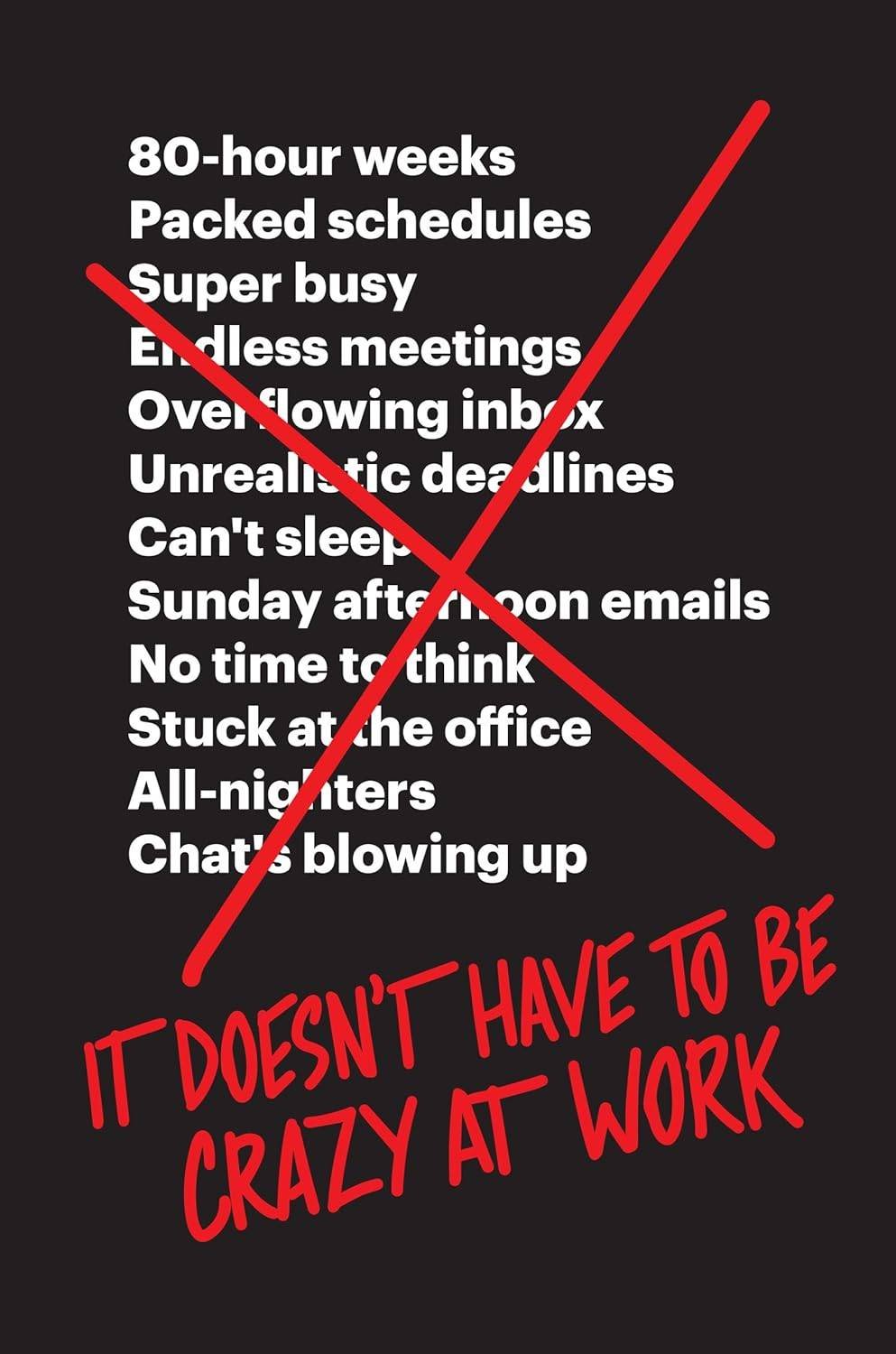
If you want to know the truth about what you’ve built, you have to ship it. You can test, you can brainstorm, you can argue, you can survey, but only shipping will tell you whether you’re going to sink or swim.
— Jason Fried and David Heinemeier Hansson in “It Doesn’t Have to Be Crazy at Work”
I love football, but I’ve never seen a professional football game. I looked at ticket to Dallas, and they were crazy expensive. It’s tough when the economics of the sport price out the fans from participating, and the new stadium for Buffalo is doing exactly that.
I’ve never watched this guy before, but really enjoyed this short nature documentary about an injured bull elk this guy found in the winter. I won’t spoil the video, but nature is cool, and wolves are beautiful. (If you’re nervous, all the footage is from after.)
I was recently on a podcast was with Tukan Das of Gia. He was interviewing service providers like me about finding service-market fit. This is my third appearance on a podcast, but no one has used such high production values on the intro. Check it out; they use Jessie Eisenberg from “The Social Network” as some of the B-roll.
(enjoy this 4️⃣ minute read)
Deep Dive on Metrics Maturity Model
How do you learn what’s going on in your business?
How fast – and how confidently – do you make decisions based on that data?
Speed matters in business. You want to adjust quickly when something happens. You want to be more correct i your adjustments than not.
If you’re fast and correct, you’re more likely to hit your goals, and more likely to beat your competitors.
To do this you’ll need hard data, not just business intuition. You need great metrics, and a system for using them.
Today I’ll introduce you to the metrics maturity model; a framework for describing maturity in data-driven decision making.
The Model
Progressing through the metrics maturity model represents a shift from reactive to proactive decision-making. A shift from human interpretation to automated insight.
Each level of the model builds on the previous. As you move up the maturity curve, you’re not just adding sophistication – you’re reducing the time between insight and action.
The model itself is very simple. It describes four stages of maturity:
In the Descriptive stage you’re…describing something you care about. These metrics tell you what is going on in your business. Examples are the number of customers, the number of failures, revenue, etc. These are the core things your business cares about.
In the Diagnostic stage you’re…diagnosing your business. These tell you why the Descriptive measures are doing what they’re doing. It could be something that happens earlier in time (e.g. the number of visitors to your website precedes a change in signups), or concurrent in time (e.g. the percentage of free customers might diagnose infrastructure costs).
In the Predictive stage you’re…predicting where your business will go with reasonable confidence. This is the power to see in the future. You’re here when you know what’s going to happen. I had this for hiring pipelines; I knew if I didn’t have the volume and passthrough rates through the hiring manager screen in month one we weren’t going to close the role by the end of the quarter.
In the Prescriptive stage, you’re so in control of your business you can…prescribe behavior. This is the power to point at something in your business and say “go up,” “go down,” or whatever you want. This level of control of your business is the strongest position to be in.
Now that we know the different levels of maturity, let’s dive into how to get to each stage.
Getting Descriptive
You establish measurement systems for what matters.
Pick 5-10 core metrics, build dashboards, and create regular reporting cadences. This is about making the invisible visible. If you can’t measure it consistently, you can’t manage it.
Getting Diagnostic
You explore the “why” behind movements in your core metrics.
When metrics move, you slice the data – by segment, time period, channel, cohort, etc. You’re comparing this month vs. last month, this customer segment vs. that one. Pattern recognition reveals the levers underneath your core metrics.
Getting Predictive
You accumulate enough historical data to build forward-looking models.
This requires time (you need multiple cycles of data) and analytical capability (regression analysis, correlation testing, or ML models). You’re testing: “When we see leading indicator X, does lagging indicator Y follow?” You’re shifting from explaining the past to forecasting the future.
Getting Prescriptive
You run experiments to derive causality and build decision rules.
Correlation points you toward hypotheses, and controlled tests (A/B tests, pilots) prove what actually drives outcomes. When you embed those learnings back into your business through SOPs or automated processes (“When condition X exists, take action Y”) you’ve moved from “we predict this will happen” to “and here’s what we should do about it.”
Try to be more accurate than this would be.
What Makes This Hard
Most companies get stuck in the Descriptive and Diagnostic layers. What makes it so difficult to get into the more advanced layers?
Missing Skill Set
Most business leaders are equipped to work in the Descriptive and Diagnostic realm: it just takes Excel and business intuition. Getting to Predictive requires a level of statistical literacy most organizations don’t have, or aren’t willing to invest in. Breaking through requires a different discipline.
You’ll be Wrong in Public
Diagnostic analysis is a forensic exercise. You’re looking around for answers to what happened, and you can keep doing it until you have a defensible story. Getting Predictive, on the other hand, means making falsifiable claims about the future, which means you’ll inevitably be wrong – repeatedly, and visibly. Most cultures punish being wrong more than they reward improved accuracy over time.
Unwillingness to Make Bets
In Descriptive and Diagnostic, you’re instrumenting what you already know. To explore the Predictive realm and beyond, you’ll need to measure things you’re not measuring today. Getting this done requires making a speculative bet with no guaranteed payoff. That kind of work can be hard to prioritize and get done.
Surprisingly, it’s not just that the math is hard; there are many cultural reasons why it’s difficult to progress to the more advanced layers. Staying Diagnostic usually feels safer than risking failed predictions. If your culture optimizes for reducing embarrassment over increasing capability, you won’t advance through metrics maturity.
Call to Action
Moving from describing what happened to prescribing what to do next demands curiosity, courage, and psychological safety. The breakthrough is when you make faster, smarter decisions, not when you build fancier dashboards. (I mean, make a fancy dashboard by all means – but be sure that’s secondary to effective metrics).
This week, take a look at your own reporting rhythm. Assess your overall maturity against this framework. Are you predominantly Descriptive or Diagnostic? In what areas might you be pushing into Predictive or Prescriptive?
How can you be courageous and push your business forward on the maturity curve?
Doing this hard work is how your business becomes truly drivable, by reducing the time from insight to action, and being right more often.
Kevin 📊
Say thanks with a coffee
If this made you nod, laugh, or steal a line for your next meeting, consider buying me a coffee.





Comments are closed